Tag: Politics
-

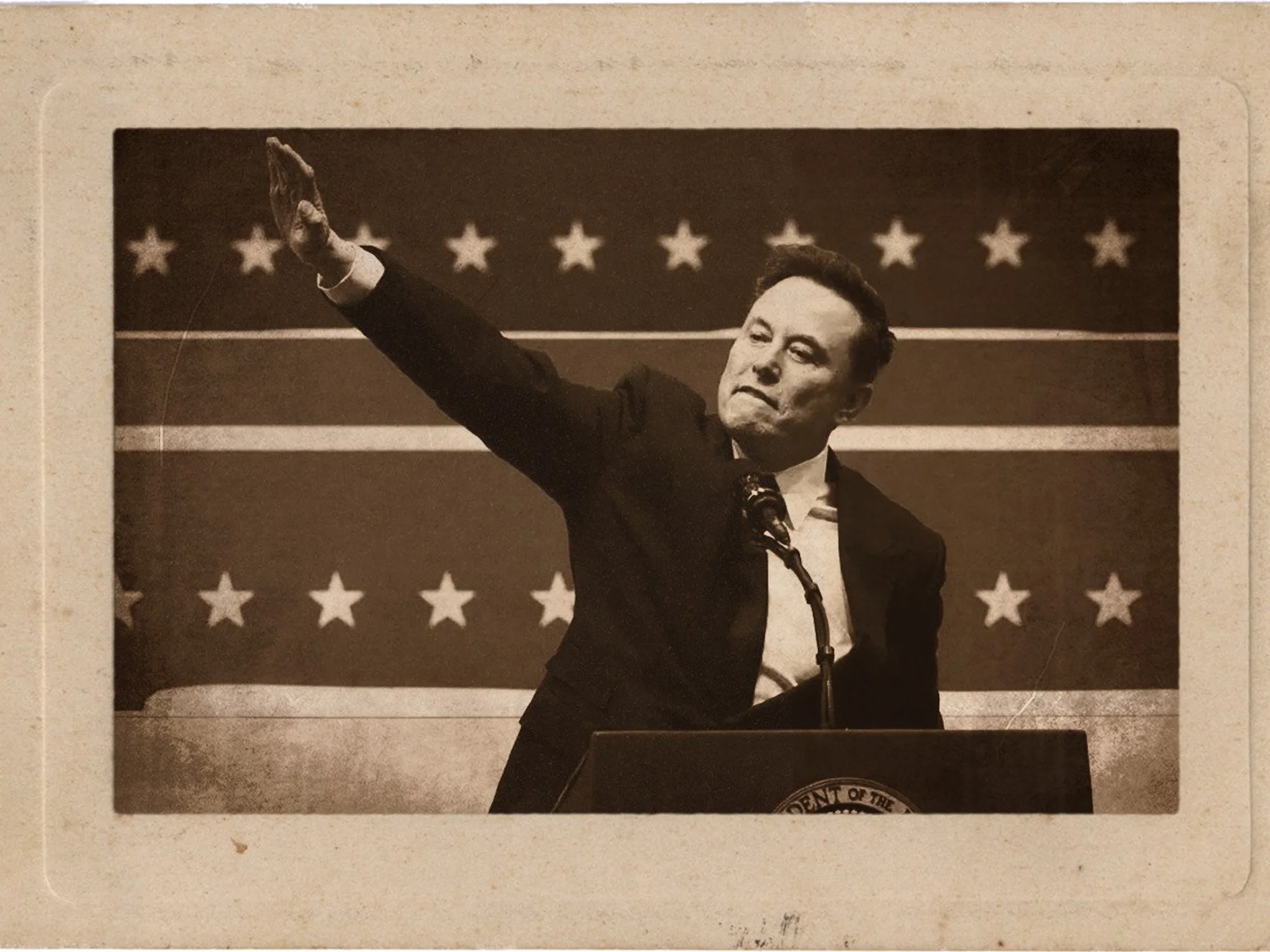
Liam Ramos, five, detained by ICE in Columbia Heights, Minnesota, outside his home on 20 January 2026.
Spirit of 1930’s Germany alive and kicking in the “Land of the Free.”
Photograph: Courtesy of Columbia Heights Public Schools

More on the BBC
-
House of Commons 22 November 1995
I expect that the House has heard of the little document, which is circulating, about the boat race between the NHS and a Japanese crew. Both sides tried hard to do well, but the Japanese won by a mile.
The NHS was very discouraged and set up a consultancy. The consultancy came to the conclusion that the Japanese had eight people rowing and one steering, whereas the NHS had eight people steering and one rowing.
The NHS appointed people to look at the problem and decided to reorganise the structure of the team so that there were three steering managers, three assistant steering managers and a director of steering services, and an incentive was offered to the rower to row harder.
When the NHS lost a second race, it laid off the rower for poor performance and sold the boat. It gave the money it got from selling the boat to provide higher than average pay awards for the director of steering services.
-
“In a time of deceit telling the truth is a revolutionary act.”
George Orwell -

Bob Olley’s unsettling vision of clash between miners and police is part of 40th anniversary show in Bishop Auckland
Mark Brown North of England correspondent
Thanks to the Guardian: Article here
Tue 7 May 2024 06.00 BSTShare
Click to enlarge…

Bob Olley was there 40 years ago at the “battle of Orgreave”. “I saw the violence,” he said, shaking his head. “I thought I was in a foreign country when I saw what the police did. It is hard to believe it happened in this country.”
The brutality he and others witnessed on 18 June 1984 as striking miners met 6,000 police officers on horses or wielding batons on foot will stay in the memory. It was in his head as, some years later, he embarked on his response to one of the world’s greatest artworks, Picasso’s Guernica.
The resulting painting, Orgreave after Guernica (2018), has gone on display at an exhibition exploring the demise of collieries and the impact on communities.
It is an unsettling presence in the show, titled The Last Cage Down, which has opened at the Mining Art Gallery in Bishop Auckland, County Durham, and coincides with the 40th anniversary of the miners’ strike.
A police officer’s eyes follow the viewer around the room. “People do say it’s disturbing to look at,” Olley said. “It’s not everyone’s cup of tea but I’ve never had anyone say: ‘I don’t like it’. The painting did what I wanted it to do.”
Olley, like many artists in the show and in the gallery’s collection more widely, did not follow a conventional career path. He went down the mines aged 16 and ended up at Whitburn colliery, near South Shields, which had tunnels going as far as three miles out under the North Sea. “You had to walk in and out.”
He was made redundant in 1968 and wasn’t sorry. “I could see the way the industry was going,” he said. “I was ready to pack up. That year was the one that the government closed more pits than at any time in the history of coalmining.”
He had left school with no qualifications but while a miner he had been doing a correspondence course in magazine illustration, and decided to try to make a career in London.
He lasted five minutes, with one of the first people he encountered being Marjorie Proops, who later became the Daily Mirror’s legendary agony aunt. Her advice to Olley, he said, was not helpful. “She said: ‘Do you come from the north?’ I said ‘I do.’ She said: ‘I suggest you go straight back’.”
Perhaps it was good advice because back in north-east England a light went on in his head about painting what he knew – northern working-class life and coalmining. He started making money and had particular success with a work called The Westoe Netty.
Other works in the new exhibition include an explosively coloured protest painting by Marjorie Arnfield called Women Protesting (1985), and works by Tom McGuinness and Barrie Ormsby.
-
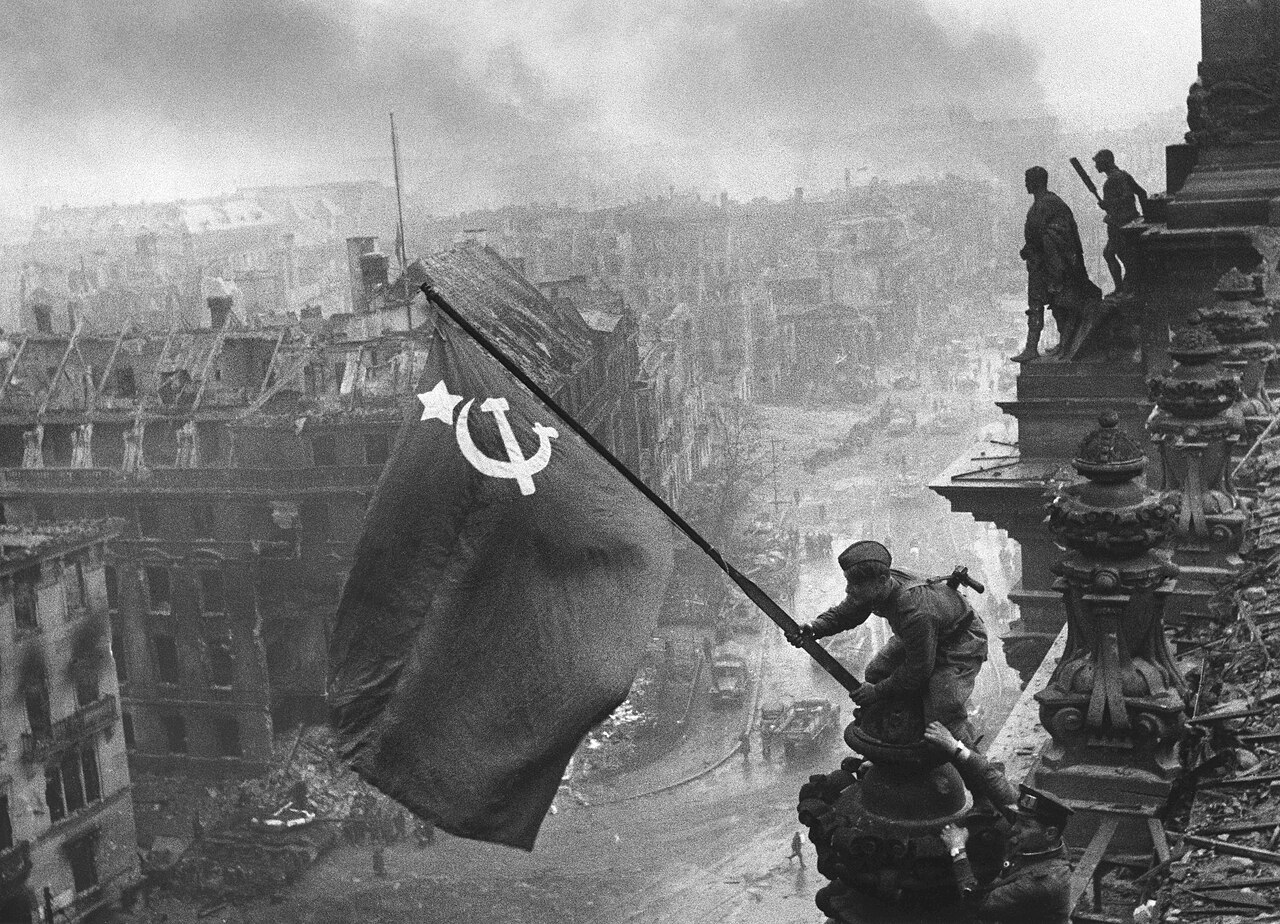
Yevgeny Khaldei’s original image of the Soviet flag being raised over the Reichstag, Berlin, 1945.
The picture was later amended to obscure the officer wearing a watch on both wrists.
Photograph: Sovfoto/Universal Images Group/Shutterstock
From The Guardian May 2024: A Russian soldier raises a Soviet flag over Berlin’s Reichstag in Yevgeny Khaldei’s well-known 1945 photograph of wartime triumph.
But in the original image, the officer standing below can clearly be seen wearing a watch on both wrists. Khaldei’s shot, first printed in a Moscow magazine, was quickly withdrawn and the extra watch, which might actually have been a military compass, was removed for safety’s sake. Looting was not a good look and was punishable by death.
-
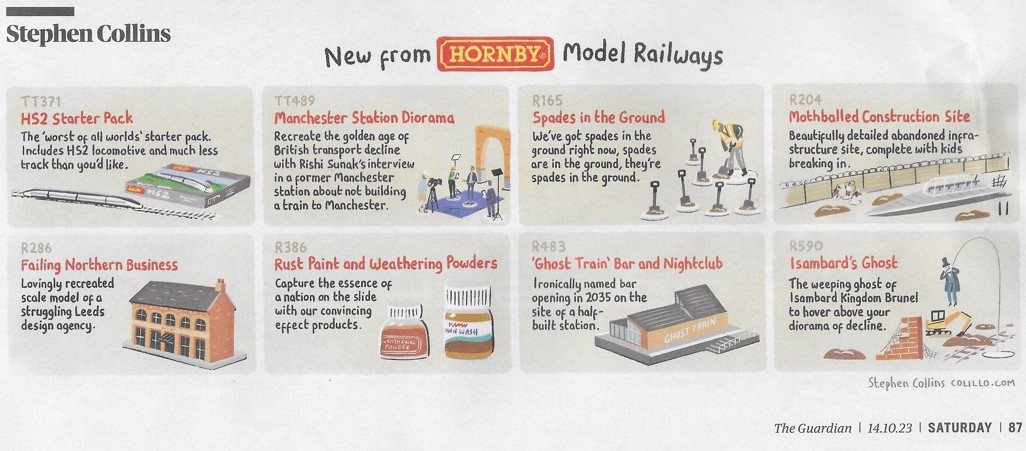
Just brilliant, HS2 R.I.P

Click image to enlarge…